The Problem

We live in a world replete with the artifacts of computer science. Some of these artifacts, like the web, the iPhone, and social media, have had such cultural impact they practically define what it means to be alive in the 21st century. And yet, the popular image of the production of these artifacts is strikingly 20th century: some geeky guy with poor social skills and questionable hygiene, hunched over a computer night after night, writing in an arcane language, a code, that only machines can understand. We might find humor in this disparity except for its serious consequences. Misconceptions about what computer science is and who can do it – misconceptions held by students, parents, teachers, guidance counselors, and even within the CS community – conspire to shape, and ultimately limit, students’ career choices. The result is an “incredible shrinking pipeline” [1,2] that produces too few computer science graduates in general and disproportionately few who are women and minorities. Here are some relevant statistics:

Our work takes aim at these problems by addressing the poor understanding students have about the practice of computer science. Our approach is to engage middle school students (6-7th grades) in a semester-long software development project carried out by college-level computer science students. The goal of the software project is one of those 21st century computer science artifacts that students can relate to: a computer game.

Benefits of participation

While our ultimate goal is to inform students about computer science practice, our project offers concrete benefits that serve the educational goals of middle school teacher.

Partners

What our teachers have to say

For decades, integrating technology into content-area curriculum has been a challenge for all educators. This form of interaction between college game designers and secondary education students allows technology to be closely tied to learning objectives in ways that are close to impossible for individual educators to implement.- Josh Yavor, Social Science teacher, Hillside Middle School
The often abstract concepts of social studies instruction are made concrete and accessible through the gaming environment. Students experience 'supply and demand,' 'human- environment interaction,' and an array of other critical concepts through direct, interactive experience. Not only is this experience both engaging and educational in itself, it provides excellent scaffolding upon which to build other forms of instruction.- Greg Orr, Social Science teacher, Hillside Middle School

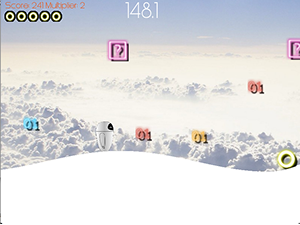
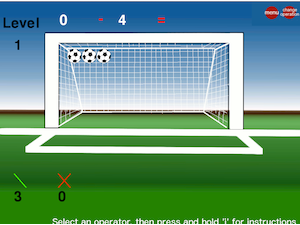
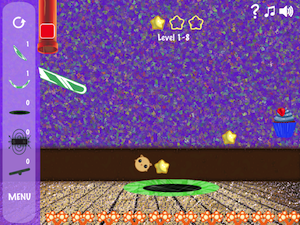
Sample Games

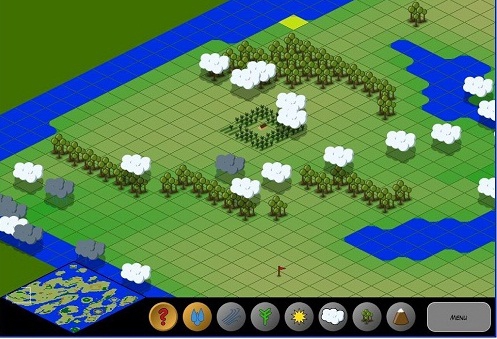
Hectare Hectare (Download)
Learning objective: Describe the importance of the natural environment in the development of agricultural settlements in different locations (e.g. available water for irrigation, adequate precipitation and suitable growing season).

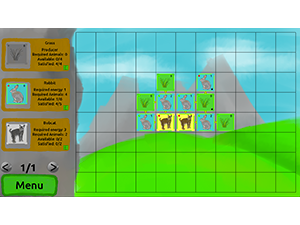
The players controls the weather and other environmental factors and must help computer-controlled agricultural settlements flourish. (Created by B. Fish, C. Loncaric, A.Novak, and A. Yodipinyanee, Spring 2010.)

Migration Sensation Migration Sensation (Download,unzip, double click on MigrationSensation.exe)
Learning objective: Investigate the significance of migrations of peoples and the resulting benefits and challenges.

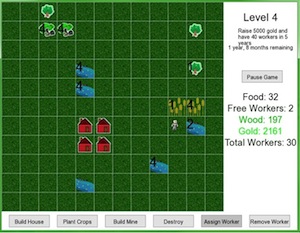
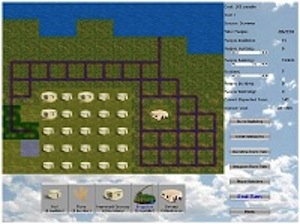
The player in Migration Sensation must attract new workers to help mine gold. The player must balance the number of workers gathering wood, gold, and food in order for her/his city to thrive.

Zorgon Undertaking Zorgon Undertaking (Download,unzip, double click on ZorgonUndertaking.exe)
Learning objective: Explain how forces of conflict and cooperation among people influence the division of the Earth’s surface and its resources. For example, explore the clash of migrating peoples with natives.

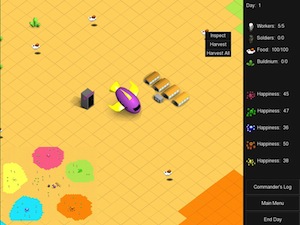
The player takes the role of the commander of a spaceship that has crash landed on Planet Zorgon. In order to return home safely, the player needs to interact with all of the surrounding alien colonies. By making peace or war with the aliens, the play can acquire the necessary resources to rebuild her ship and win the game. (Created by Elliot Godzich, Andy Kearney, Leon Liu, Colin O'Byrne, and Emma Taborsky, Spring 2011. Further development by Natasha Parikh and Emma Taborsky, Summer 2011.)

Dinocracy Dinocracy (Download,unzip, double click on Dinocracy.exe)
Learning objective: Analyze competing ideas about the purposes government should serve in a democracy and in a dictatorship (e.g., protecting individual rights, promoting the common good, providing economic security, molding the character of citizens, or promoting a particular religion).

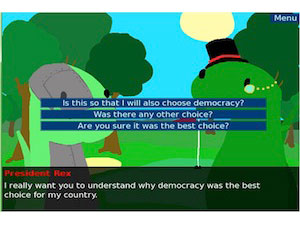
The player takes the role of a dinosaur robot who is running for president and must choose whether to run on a democratic or authoritarian platform. To win the election (and the game) the player must woo other political leaders and activists who agree with her platform, in order to gain their support. (Created by Eric Aleshire, Alexa Keizur, Benson Khau, and Kimberly Sheely, Spring 2011. Further development by Sasha Paudel, Summer 2011.)

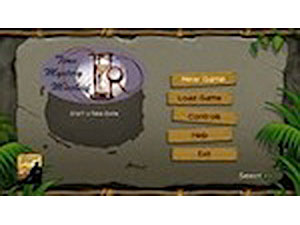
Time Mystery Mischief Time Mystery Mischief (Download, unzip, double click on setup.exe)
Learning objective: Explain how historians use a variety of sources to explore the past (e.g. artifacts, primary and secondary sources including narratives, technology, historical maps, visual and mathematical quantitative data, radiocarbon dating, DNA analysis).

The player must rescue villagers trapped in the past by an evil villain with a time machine. To discover when each villager is located, the player must find and decipher clues in historical artifacts. (Created by E. Carlson, J. DeBlasio, K. Ewing, E. Fujimoto, K. Gragg, S. Lakhani, A. Lawrence, and L. Vasserman, Fall 2009.)

Village Defense Village Defense (Download, unzip, double click on VillageDefense.exe)
Learning objective: Explain the impact of the Agricultural Revolution (stable food supply, surplus, population growth, trade, division of labor, development of settlements).

The player delegates villagers to various tasks, such as hunting, farming, and village defense, in order to ensure their continued survival. (Created by A. Kearney, E. Mullen, E. Myers-Stanhope, Summer 2010.)

Energy Empire Energy Empire (Download,unzip, double click EnergyEmpire.exe)
Learning objective: Describe ways the physical environment is modified by human activities, and how those actions are influenced by the values societies place on the Earth’s natural resources, physical features, and processes (e.g. changes in the tropical forest environments of Brazil, Peru and Costa Rica).

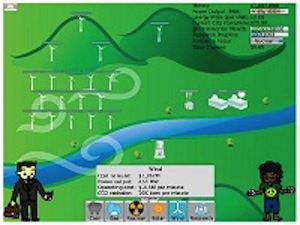
The player is charged with running a power company and must balance economic and environmental factors when choosing the types power plants to build. (Created by D. Huie, E. Mullen, S. Pernsteiner, and A. Zuckerberg, Spring 2010.)

Publications

Jessica Blevins, Andy Kearney, Eric Mullen, Emily Myers-Stanhope, Elizabeth Sweedyk, Muddy Hill Games. ITiCSE 2011.
Elizabeth Sweedyk, How Middle School Teachers Solved Our SE Project Problems. CSEET 2011.
Elizabeth Sweedy, Women Build Games, Seriously. SIGCSE 2011.
Emma Carlson, Jessica Blevins, Elizabeth Sweedyk, Time Mystery Mischief. Grace Hopper 2010.
E. Sweedyk, G. Orr, and J. Yavor, Games for students, Games by students, A Collaborative Design Project. Ed-Media 2010

Contact

For more information contact Z Sweedyk or Mike Erlinger.

Funding

Funding for this project has been provided by the NSF and the HMC CS Dept.

Citations

[1] Camp, T. 2002. The incredible shrinking pipeline. SIGCSE Bull. 34, 2 (Jun. 2002), 129-134.
[2] Morris, H. H. and P. Lee. 2004. The Incredibly Shrinking Pipeline is not Just for Women Anymore. Computing Research News 16(3):20.
[3] NCWIT, Women in IT: The facts. http://www.ncwit.org/thefacts.
[4] CRA Taulbee study, http://www.cra.org/resources/taulbee/.
[5] Carter, L., Why students with an apparent aptitude for computer science don't choose to major in computer science, Proceedings of the 37th SIGCSE technical symposium on Computer science education, March 03-05, 2006, Houston, Texas, USA .