Sketch Recognition Research @
HMC
For the past 5 years I have been working on a long-term sketch
recognition project to build and evaluate a sketch-based tool for
digital circuit education.
Smarter Educational Software
Through Sketch Recognition
Project Summary
The central goal of this research is to construct and deploy computer
simulation tools capable of understanding students' hand-drawn
diagrams. The results of free-sketch recognition research
cannot
yet be incorporated into end-user applications for two
reasons.
First, free-sketch recognition is not sufficiently robust to
incorporate into useful tools. Second, little is known about
how
to build usable interfaces that incorporate free-sketch recognition.
This work will bridge the gap between free-sketch recognition
technology and its end-users by focusing on its application to
undergraduate engineering design. The outcome of this work
will
be improved techniques for free-sketch recognition, guidelines for
incorporating free-sketch recognition into usable interfaces, and
educational sketch-based simulation tools.
You can download a couple videos of the project here:
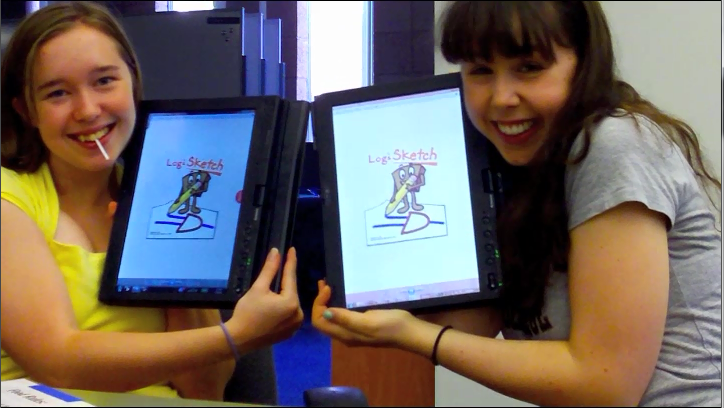 A
silly and
fun video, that shows off the system at the end of summer 2011 [.m4v,
20MB]
A
silly and
fun video, that shows off the system at the end of summer 2011 [.m4v,
20MB]
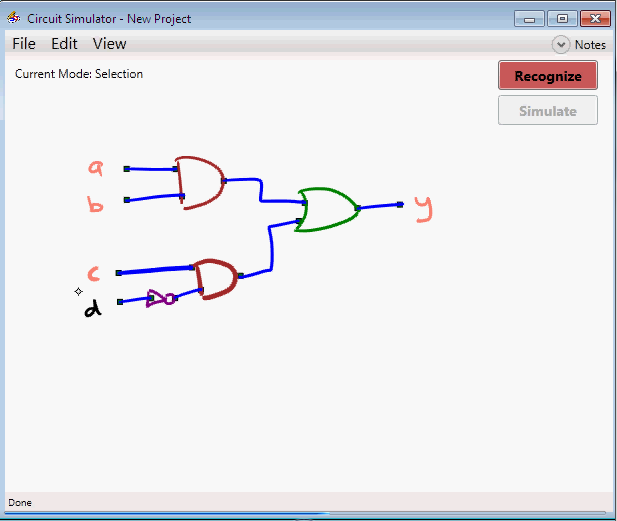 A more "serious" video,
end of summer 2010 (no visual
functionality difference from current system) [.avi, 27MB, no audio]
A more "serious" video,
end of summer 2010 (no visual
functionality difference from current system) [.avi, 27MB, no audio]
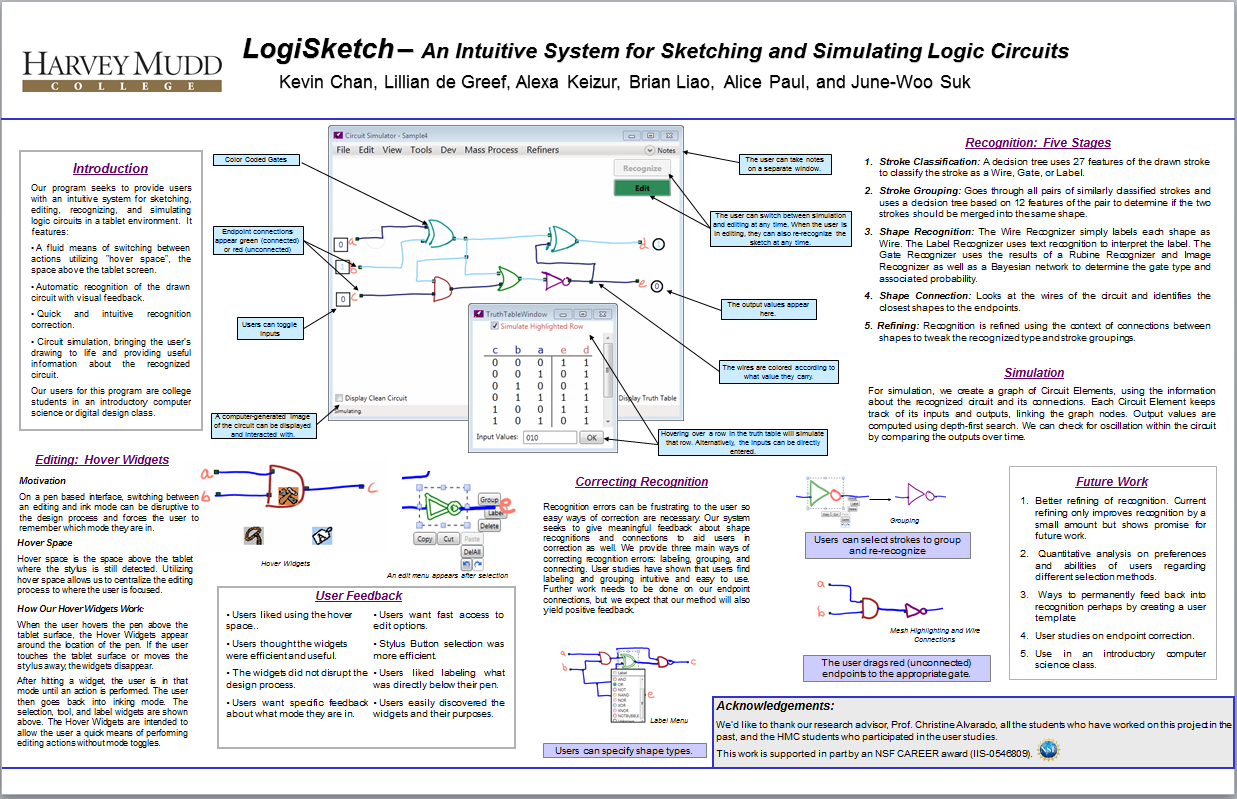
A central goal of our project is to develop tools that others will find
useful. There are a number of tools and data, including
LogiSketch itself, available on our download
page.
Acknowledgments
This work is funded by an NSF CAREER award,
under Grant Number IIS-0546809.
Any opinions, findings and conclusions or recommendations expressed in
this material are those of the author(s) and do not necessarily reflect
the views of the National Science Foundation (NSF).
HMC Sketchers People
PI: Christine
Alvarado, HMC Computer Science
Faculty collaborator: Sarah
Harris, HMC Engineering
Current Students
Kiley Sobel, HMC '12, double Computer Science/Psychology
Former Students
Chris Acon: HMC '07, Engineering
Denis Aleshin: HMC '10, Joint Math/Computer Science
Anton Bakalov: HMC '09, Computer Science
James Brown: HMC '11, Computer Science
Ned Burns: Pomona '08, Computer Science
Kevin Chan: HMC '11, Engineering
Howard Chen: HMC '07, Engineering
Andrew Danowitz: HMC '08, Engineering
Lilian de Greef: HMC '12, Computer Science
Eric Doi: HMC '09, Computer Science
Josh Ehrlich: HMC '11, Computer Science
Jason Fennell: HMC '08, Joint Math/Computer Science
Marty Field: HMC '10, Computer Science
Fiona Foo: HMC '12, Computer Science
Emily Fujimoto: HMC '11, Computer Science
Laurel Fullerton: HMC '07, Engineering
Sam Gordon: HMC '08, Engineering
Kris Karr: HMC '09, Computer Science
Andy Kearney: HMC '13, Computer Science
Alexa Keizur: HMC '12, Computer Science
Ellen Kephart, HMC '08, Computer Science
Michael Lazzereschi: Pomona '06, Computer Science
Calvin Loncaric: HMC '12, Computer Science
Miranda Parker: HMC '14, Computer Science
Scott Parkey: HMC '09, Computer Science
Alice Paul: HMC '12, Computer Science
Jessi Peck: HMC '13, Computer Science
Max Pfluger: HMC '07, Engineering
Ben Pollard, Pomona '12, double Computer Science/Physics
Sara Sheehan: MIT (was at HMC for 1 year)
Joe Simons: HMC '08, Computer Science
Devin Smith: HMC '09, Computer Science
Mike Roberts: HMC '08, Computer Science
Raquel Robinson: HMC '10, Engineering
Paul Wais: HMC '07, Computer Sceince
Matt Weiner: HMC '08, Engineering
Aaron Wolin: HMC '07, Computer Science
Alice Zhu: HMC '10, Computer Science
Related Publications and
Background Reading
Please see my publications
page
for related publications. If you are interested, I can give
you
pointers to many more related publications that others have written, so
just let me know.
Last
modified September,
2011